Home › Commercial Gravel-to-Asphalt Conversions
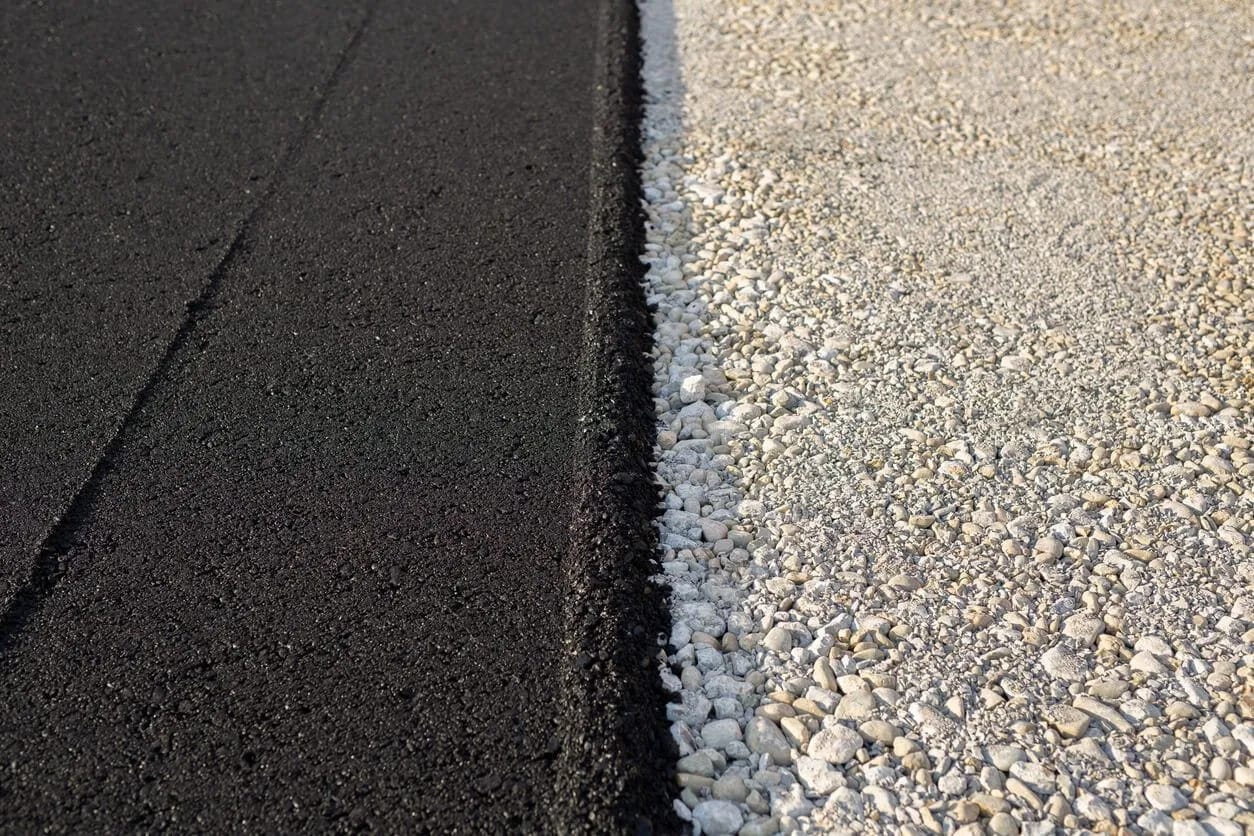
Transform muddy, dusty surfaces into professional pavement with commercial gravel to asphalt conversions in Fayetteville, NC. We upgrade gravel lots, drives, and access roads into durable asphalt surfaces that are easier to maintain and more inviting to customers and employees. Our team designs the right base and asphalt thickness for your traffic and budget.
Precision Asphalt Fayetteville provides professional commercial gravel to asphalt throughout Fayetteville, NC, North Carolina and the surrounding area. Our licensed, insured crew delivers safe, clean, on-time work with a free estimate before anything begins. Call (910) 659-3742 or request your free quote.
Turn Gravel Parking Areas Into Reliable Asphalt Surfaces
If your Fayetteville commercial property still relies on gravel lots or drive lanes, you already know the headaches. Washouts after a hard summer storm, ruts from delivery trucks, mud tracked into offices, and constant dust on cars and storefronts. Precision Asphalt Fayetteville helps local businesses solve those problems with carefully planned commercial gravel to asphalt conversions designed for our sandier Cumberland County soils and frequent heavy rains.
We commonly work with small and mid-size retail centers along Raeford Road, churches and schools with overflow gravel parking, light industrial properties near I-95, and older office parks that never upgraded from stone. Each site is different, so we begin with a detailed walk-through and elevation check, not just a quick visual estimate. Our goal is to turn your loose gravel surface into a durable asphalt lot or drive that drains properly, meets traffic demands, and looks like a finished part of your business, not an afterthought.
From the first visit, we talk through how your lot is actually used: where employees park, how delivery trucks move, where customers walk, and what parts stay busy versus only used occasionally. This allows us to recommend the right pavement thickness, base prep, and layout so your new asphalt surface works in real life, not just on a drawing.
How We Convert Gravel To Asphalt On Commercial Sites
A quality gravel to asphalt conversion is more than just paving over rock. Precision Asphalt Fayetteville follows a multi-step process tailored to local conditions in Fayetteville.
1) Site evaluation and measurements: We measure the area, check current gravel depth, identify soft spots, and look at how water moves across the site after storms. On older properties, we note any existing underground structures or patched utilities so they can be protected or adjusted before paving.
2) Drainage and grade planning: Gravel lots often hide drainage issues because water simply disappears into ruts and low spots. For asphalt, we must plan slopes so water leaves the surface quickly. We set target elevations for the finished asphalt, then work backwards to determine where we need to add or remove stone. In Fayetteville’s sandy-subgrade areas, we focus on creating a stable, compacted base that does not shift under truck traffic.
3) Base repair and reinforcement: If your existing gravel is clean and reasonably deep, we can often regrade and compact it as part of the base. In weak areas, we may undercut (remove several inches of soft material), then bring in new ABC stone, compacted in lifts with vibratory rollers. For commercial traffic lanes and dumpster pads, we may add additional base thickness or consider a stronger binder course to protect against rutting.
4) Edge definition and transitions: Gravel lots usually have loose, undefined edges. Before paving, we establish clear edges using sawcuts into any adjoining asphalt, concrete tie-ins at sidewalks or loading docks, or compacted shoulders where the lot meets soil. Proper transitions keep water from sneaking under the edges and reduce cracking over time.
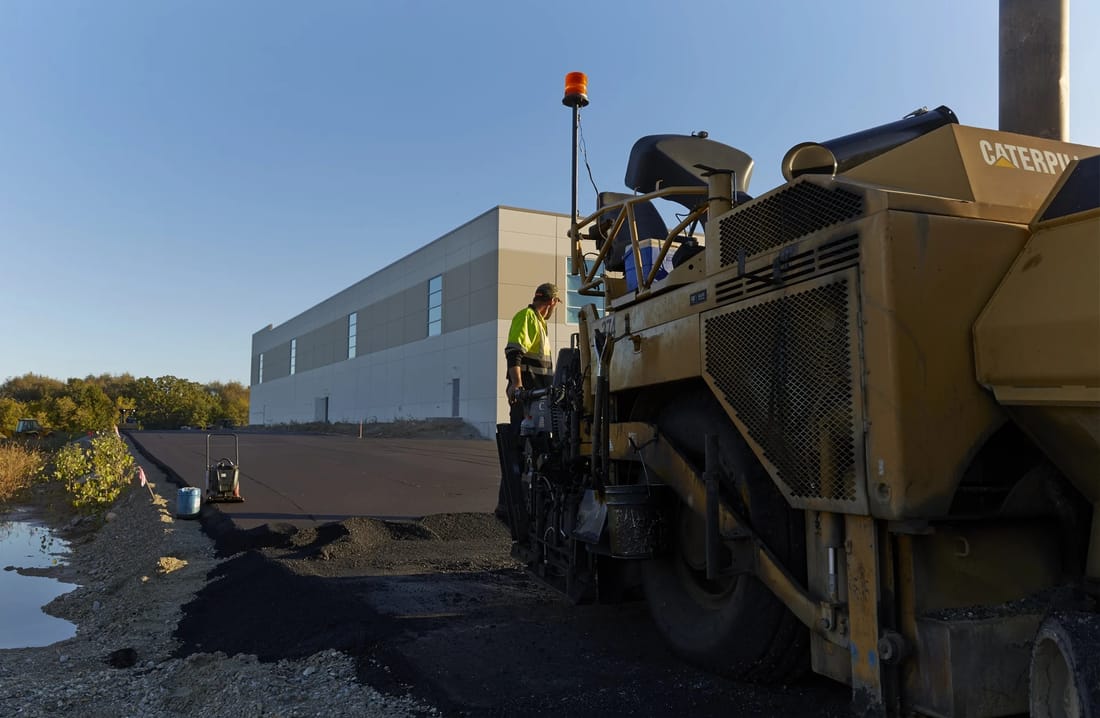
5) Asphalt paving: For most commercial gravel to asphalt projects, we use a two-course system: a thicker base (binder) layer for strength, then a finer surface layer for a smooth, clean finish. Thickness recommendations vary based on use. Light-use office and retail parking may need a thinner section, while industrial and frequent tractor-trailer traffic near distribution buildings require more structure.
6) Compaction, striping, and final walk-through: After paving, we compact the asphalt with steel drum rollers, address any visible low spots while the mix is still workable, and allow curing time before restriping. We then stripe stalls, accessible parking, directional arrows, and any fire lanes. Finally, we walk the lot with you to confirm drainage, layout, and access points all function as intended.
Design Choices That Affect Cost, Longevity, And Appearance
Two commercial gravel lots of the same size can vary widely in cost to convert to asphalt. Precision Asphalt Fayetteville explains the tradeoffs before you commit, so you can shape the project to your budget and traffic needs.
Pavement structure: Thickness is the biggest cost driver. A medical office parking lot with mostly cars and light service vehicles might get by with one base course and a standard surface layer. A distribution yard off Eastern Boulevard that sees daily semi-trailer traffic will need more base stone and thicker asphalt to avoid rutting and alligator cracking.
Drainage features: If your existing gravel lot already drains well, we can usually keep costs down with grading and careful slopes. If water currently sits in large puddles, you may need new swales, added catch basins, or adjustments to existing inlets. Stormwater management is especially important for properties that tie into city systems or are near creeks and drainage channels.
Layout and striping: A gravel lot often evolves over time, with “informal” parking patterns. Converting to asphalt is the perfect time to fix tight turns, add accessible parking near entrances, widen aisles for SUVs and delivery vans, and improve pedestrian routes from parking to your door. Better layout often lets you fit more usable spaces without expanding the footprint.
Material and mix choices: Not every asphalt mix is right for every site. For loading areas or high-turn movements near drive-thrus, we may recommend a slightly stronger mix to reduce shoving and scuffing. For entry drives that double as your “first impression,” we focus on a smooth, uniform surface that stays attractive for years, then plan a sealcoating schedule to preserve that appearance.
Phasing work to stay open: Many Fayetteville businesses cannot shut down for several days. We can design the project in phases so sections of your gravel lot stay open while others are being converted, or schedule critical tie-ins for slower business days. The design and staging approach can influence labor hours and overall project cost.
Local Issues We Solve On Fayetteville Commercial Properties
Our team has seen the specific problems that show up in gravel to asphalt conversions around Fayetteville and the Sandhills region, and we plan work to prevent them instead of waiting for failures.
Soft subgrades and “pumping”: In some parts of Fayetteville, especially older industrial and warehouse areas, the subgrade under the gravel contains pockets of clay or poorly compacted fill. If paved over as-is, these spots can pump water and fines, leading to premature cracking. We use proof rolling to identify these weak zones, then undercut and rebuild them or reinforce with additional stone before paving.
Steep drive entrances from city streets: Older gravel drives that connect to roads like Ramsey Street or Owen Drive may have steep or uneven tie-ins. When we convert to asphalt, we adjust elevations so vehicles do not bottom out and water does not run back toward the building. This may involve minor curb work or coordination with existing sidewalks.
Tracking, dust, and ADA concerns: Gravel tracked onto city sidewalks and into lobbies is not just a housekeeping issue. It can create slip hazards and noncompliance for accessible routes. By converting to asphalt and adding clearly defined accessible parking with appropriate slopes and crosswalk markings, we help you improve safety and make it easier to meet current accessibility expectations.
Weather-related damage: Fayetteville’s pattern of summer thunderstorms and occasional freeze-thaw cycles is hard on poorly built pavement. Our conversion approach focuses on stable compaction and drainage so that your new asphalt surface can handle intense rainfall without rapid deterioration, even in heavy-use drive lanes around shopping centers and service facilities.
What To Expect When You Work With Precision Asphalt Fayetteville
Commercial gravel to asphalt conversions can affect daily operations, so we put a lot of effort into clear planning and communication. Before any equipment arrives, we review the schedule with you, identify which entrances must remain open, and decide how employees, customers, and delivery drivers will be directed during each phase.
You receive a written scope that spells out base preparation, asphalt thicknesses, drainage modifications, and striping layout. This is where we lock in important details such as the number of accessible stalls, whether you want numbered spaces or reserved spots, and any special markings like loading zones or short-term pickup spaces.
During construction, a foreman on site is responsible for quality checks, including base compaction, slope verification, and final surface smoothness. If unexpected issues show up, such as buried debris in the existing gravel or an unmarked utility, we stop and discuss options before proceeding, so there are no surprises on your invoice.
After paving, we walk the site with you, check drainage during or after the first rain when possible, and review basic care: when to open to traffic, where to place wheel stops if needed, and how soon to plan for sealing and maintenance. Our goal is for your new asphalt surface to handle your current traffic comfortably and to be adaptable if you expand or add buildings in the future.
If you are considering converting a gravel lot or drive to asphalt anywhere in Fayetteville or the surrounding communities, Precision Asphalt Fayetteville is ready to evaluate your site, explain your options in plain language, and deliver a finished surface that upgrades both function and curb appeal.