Home › Road, Street, and Municipal Paving
Partner with a reliable contractor for road paving in Fayetteville, NC. We construct and resurface asphalt streets, subdivision roads, and municipal pavements with proper grading, compaction, and traffic control. Our crews handle everything from small connector roads to multi block resurfacing projects with efficient scheduling and attention to driving quality.
Precision Asphalt Fayetteville provides professional road paving throughout Fayetteville, NC, North Carolina and the surrounding area. Our licensed, insured crew delivers safe, clean, on-time work with a free estimate before anything begins. Call (910) 659-3742 or request your free quote.
Road, Street, and Municipal Paving in Fayetteville, Built for Real Traffic
Road paving in Fayetteville is not just putting down blacktop. It is building a surface that can handle school buses, garbage trucks, military traffic from Fort Liberty, and summer thunderstorms without breaking apart in a few years. At Precision Asphalt Fayetteville, we focus on practical, durable road, street, and municipal paving that fits local conditions and budgets.
For city streets, subdivision roads, and access drives, the first questions we ask are about traffic type, speed, and drainage. A neighborhood cul-de-sac with light residential traffic needs a different pavement structure than a connector road that sees constant truck deliveries. We design the asphalt thickness, base depth, and mix type around those real conditions, not a one size fits all template.
Fayetteville’s weather plays a big role. We see high heat, heavy rain, and periods of freezing and thawing. That combination pushes water into weak spots and can create potholes, edge cracking, and ruts. Our paving plans and material choices are built around those local realities, with an emphasis on strong base work, tight joints, and proper slope so water drains off instead of soaking in.
How the Road Paving Process Really Works, Step by Step
When Precision Asphalt Fayetteville paves a road or municipal street, the visible asphalt is only part of the job. The long term performance is decided by the site prep and base work that most people never see.
It starts with evaluation and layout. We walk or drive the route, record existing failures like alligator cracking or standing water, and look at surrounding grades, ditches, and curb elevations. For new roads, we review plans to confirm cross slope (usually 1.5 to 2.0 percent for drainage), lane widths, and tie in points to existing pavement.
Next is subgrade and base preparation. For reconstruction, that often means milling off the old asphalt to a set depth, then proof rolling the underlying stone or soil with a loaded truck or roller. Soft spots that pump or deflect get dug out and replaced with compacted stone. On new roads, we install and compact a graded aggregate base to a specified thickness, typically 6 to 12 inches depending on traffic loads. Compaction is checked as we go because a weak base will show up later as potholes and ruts.
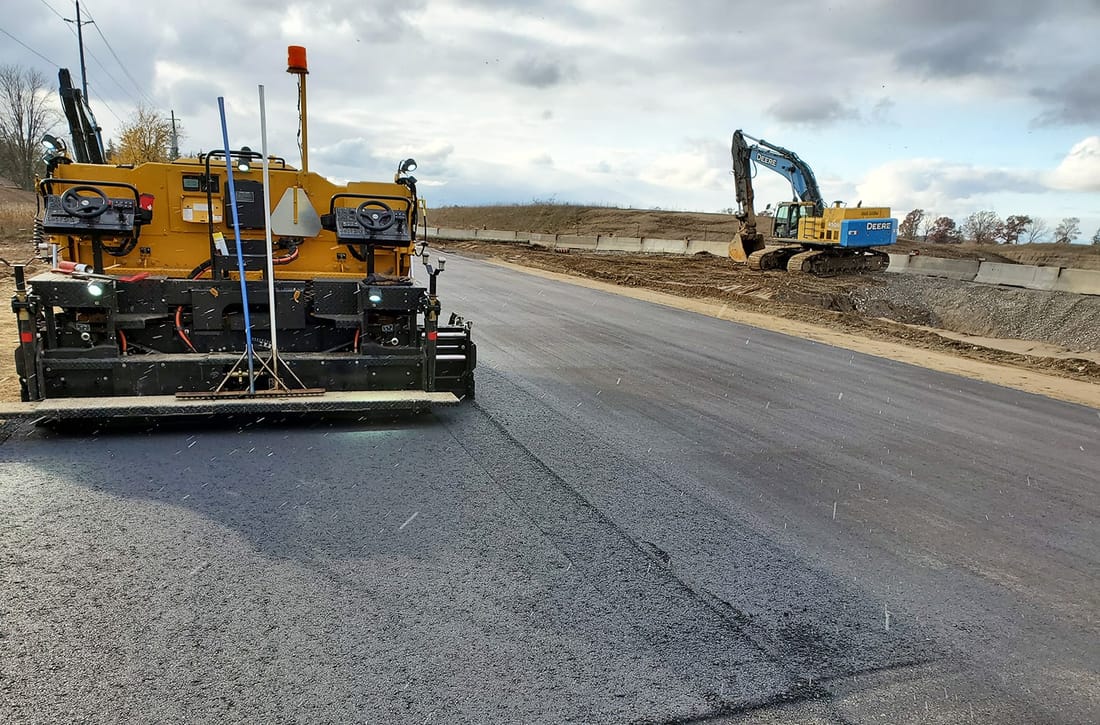
Once the base is right, we place the asphalt in lifts. For a municipal or heavy use road in Fayetteville, a common structure is a stronger base course asphalt (often 2 to 3 inches) topped with a finer surface course (1.5 to 2 inches). For lighter residential streets we may adjust those depths. The asphalt is placed with a paver to control thickness and smoothness, then compacted immediately with steel and rubber tire rollers while it is still at the proper temperature.
Edge tying and transitions are handled carefully. Where a new road meets an existing one, we saw cut and notch the old pavement, then tie in the new asphalt so there is no bump and no exposed vertical joint for water to enter. On streets without curb and gutter, we shape the shoulders so water flows away from the pavement, not along the edge where it can erode and undermine the road.
Material Choices, Mix Designs, and How They Affect Cost and Lifespan
Most people just see black pavement, but there are real options in asphalt mix design that affect how a Fayetteville road performs. Precision Asphalt Fayetteville works with local plants to select mixes that match the specific project, not just whatever is cheapest that week.
For higher volume or heavier load streets, we often recommend a base course with a larger aggregate size and a stiffer binder. This helps resist rutting from trucks and buses, especially in our hot summers when softer asphalt can deform. The surface course uses a smaller aggregate for a smoother ride and better contact with tires. In some cases, like bus routes or emergency access roads, we may suggest a thicker overall section or a higher grade binder to handle the stress.
Recycled asphalt pavement (RAP) is another cost and performance factor. Using RAP can lower material costs and is common in municipal work, but the percentage matters. Too much RAP in the wrong location can make the mix more brittle and prone to cracking, especially with our freeze thaw cycles. We discuss with the owner or agency where recycled content makes sense and where a lower RAP, higher performance mix is worth the added cost.
Cost is driven by more than just asphalt tonnage. Access, traffic control needs, base repair, drainage improvements, manhole and valve adjustments, and required striping or signage all factor into the total price. Before we quote a job, we look carefully at all these items so there are fewer surprises once work begins. It may cost more upfront to fix a drainage issue or stabilize a soft area, but it usually avoids repeated patching and complaints down the road.
Planning, Permits, Traffic Control, and Working Around the Public
Road and municipal paving in and around Fayetteville has to work around residents, businesses, schools, and public safety. Precision Asphalt Fayetteville plans each project to minimize disruption while keeping our crews and the public safe.
Scheduling is the first piece. For school zones, we often pave in summer or during breaks. Downtown streets or busy commercial routes may be better suited for night work or weekend shifts. Our climate also guides timing. Full depth paving is usually best from late spring through early fall when temperatures support proper asphalt compaction. In cooler months we focus more on shorter sections, patching, or projects where we can control plant to site times to keep the mix hot.
Permits and coordination matter. Within city or county limits, we coordinate with the appropriate public works or transportation department, follow their specifications, and obtain any required right of way or lane closure permits. For subdivision and private roads that will be dedicated to the city in the future, we pay careful attention to meeting the current municipal standards for thickness, materials, and testing.
Traffic control on active roads includes clear signage, cones, flaggers, and sometimes temporary detours. We design traffic setups so emergency vehicles can still get through and local residents are not completely cut off. Before we start, we explain to the owner or municipality what sections will be closed when, how long curing and cooling will take before traffic can roll, and what access will look like for homeowners, deliveries, and transit.
What Fayetteville Customers Should Check Before Hiring a Road Paving Contractor
Choosing a road paving contractor for a Fayetteville street, subdivision, or municipal project is more than comparing per ton prices. There are a few specific things you should ask and look for before you sign a contract with anyone, including Precision Asphalt Fayetteville.
First, ask how they design pavement thickness and structure. If the answer is only based on what they have always done, with no mention of traffic loading, soil conditions, or local municipal standards, that is a warning sign. A responsible contractor can explain why they are recommending a certain base depth and asphalt thickness for your particular road.
Second, ask about drainage and base repair. Any proposal that ignores standing water, low shoulders, or known soft spots is likely to lead to short lived results. We include line items or clear language about base undercut, stone replacement, shoulder shaping, or ditch cleaning if those are obviously needed to protect the pavement.
Third, confirm how they handle compaction and quality checks. On proper road paving jobs, especially those that may be turned over to a municipality, density and thickness should be verified. We welcome inspection, and where required, we work with third party testing labs to document that the project meets specification.
Finally, talk about staging and communication. Roads affect a lot of people. We provide a clear schedule, traffic control plan, and point of contact so property managers, HOAs, and public agencies know who to call and what to expect on each paving day. That planning is just as important as the asphalt mix if you want a road project that finishes on time and without unnecessary headaches for drivers and residents.